
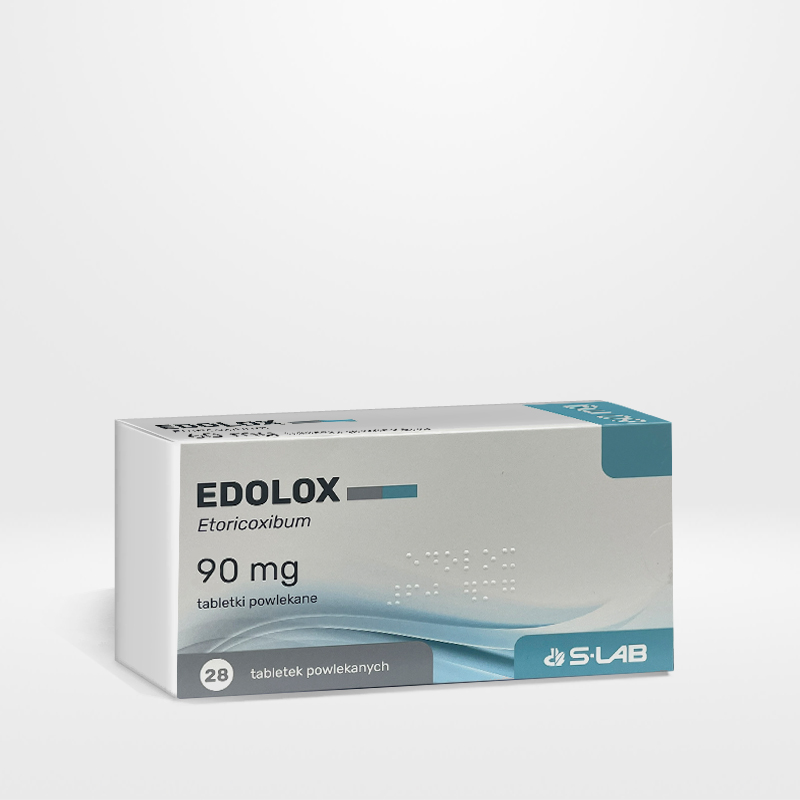
International Nonproprietary Name (Active Ingredient): etoricoxib
Clinical-pharmacological group: Anti-inflammatory agents → Nonsteroidal anti-inflammatory drugs → Nonsteroidal anti-inflammatory drugs for systemic use → Selective cyclooxygenase-2 inhibitors
Manufacturer: S LAB
Country of Manufacture: Poland
Dosage form: 60,90 mg tablet N28
Dispensing regime: Group II (Dispensed in form N3 with a prescription)
Pharmacodynamics:
Etoricoxib is a nonsteroidal anti-inflammatory drug (NSAID) and a selective inhibitor of cyclooxygenase-2 (COX-2). It blocks the production of prostaglandins, providing anti-inflammatory, analgesic, and antipyretic effects. Etoricoxib selectively inhibits COX-2 without affecting COX-1 at doses up to 150 mg/day, reducing inflammation-related symptoms without affecting platelets or the gastrointestinal mucosa.
Pharmacokinetics:
- Absorption: Rapidly absorbed after oral administration with 100% bioavailability. The maximum plasma concentration (Cmax) is 3.6 µg/mL after a 120 mg dose, reached within 1 hour.
- Distribution: Over 92% bound to plasma proteins. The volume of distribution is 120 L, and it crosses both the placenta and the blood-brain barrier.
- Metabolism: Metabolized in the liver via the CYP450 system, producing mainly 6-hydroxymethyl-etoricoxib. Less than 1% is excreted unchanged in urine.
- Excretion: 70% excreted by the kidneys, 20% by the intestines. It has a half-life of 22 hours with a cumulative clearance of 50 mL/min.
Special Considerations:
- Liver Disease: In patients with mild liver impairment (Child-Pugh 5-6), the AUC increases by 16% at a 60 mg/day dose.
- Kidney Disease: In patients with moderate to severe kidney damage or chronic renal failure, pharmacokinetics remain similar to healthy individuals.
- Elderly: No dosage adjustment is required.
Indications:
Symptomatic therapy for:
- Osteoarthritis
- Rheumatoid arthritis
- Ankylosing spondylitis
- Pain and inflammatory symptoms associated with acute gouty arthritis.
Contraindications:
- Hypersensitivity to any component of the medication.
- Complete or incomplete bronchial asthma, recurrent nasal polyps.
- Intolerance to acetylsalicylic acid or other NSAIDs (including in history).
- Erosive-ulcerative lesions of the stomach and duodenum, active gastrointestinal bleeding.
- Cerebrovascular or other types of bleeding.
- Inflammatory bowel diseases (e.g., Crohn’s disease, ulcerative colitis) during flare-ups.
- Hemophilia or other blood coagulation disorders.
- Severe heart failure (NYHA II-IV), severe liver failure (Child-Pugh score >9) or active liver disease.
- Severe kidney failure (creatinine clearance <30 mL/min), progressive kidney disease.
- Confirmed hyperkalemia.
- Post-aortic coronary bypass period.
- Peripheral artery disease.
- Cerebrovascular disease.
- Clinically significant ischemic heart disease; uncontrolled hypertension (BP >140/90 mmHg).
- Pregnancy, breastfeeding, children under 16.
Use with Caution:
- History of gastrointestinal ulcerative damage, Helicobacter Pylori infection.
- Elderly patients, prolonged NSAID use, frequent alcohol consumption, severe systemic diseases, dyslipidemia/hyperlipidemia, diabetes, hypertension, edema, fluid retention, smoking, impaired creatinine clearance.
- Co-administration with:
- Anticoagulants (e.g., warfarin).
- Antiplatelet agents (e.g., acetylsalicylic acid, clopidogrel).
- Oral glucocorticosteroids (e.g., prednisolone).
- Selective serotonin reuptake inhibitors (e.g., citalopram, fluoxetine, sertraline).
Patients with liver failure (Child-Pugh score 5-6) should not exceed a 60 mg daily dose.
Dosage and Administration:
Take orally, regardless of food intake, with a small amount of water.
Osteoarthritis
Recommended dose: 60 mg once daily.
Rheumatoid Arthritis and Ankylosing Spondylitis
Recommended dose: 90 mg once daily.
Acute Gouty Arthritis
During the acute phase, recommended dose: 90mg once daily.
The use of 90 mg dose is allowed for up to 8 days.
For the desired minimum effective dose, a short treatment course is recommended.
For pain syndrome, the average therapeutic dose is 60 mg daily.
Special Instructions:
Edolox requires careful monitoring of blood pressure. Blood pressure should be monitored for the first two weeks of treatment and periodically thereafter.
Regular monitoring of kidney and liver function is also necessary. If liver transaminase levels rise above three times the upper limit of normal, the medication should be discontinued. When extending treatment, consider the increased risk of side effects in older patients. Periodic reassessment of the necessity to continue the treatment and potential dose reduction is advised.
The concurrent use of this medication with other NSAIDs is not recommended. Etoricoxib may negatively affect female fertility and is not recommended for women planning to become pregnant.
Edolox contains a small amount of lactose, which should be considered when prescribing to patients with lactose intolerance.
Caution is advised when driving or performing potentially dangerous tasks that require quick reactions and concentration during treatment.
Storage Conditions:
Store at or below 30°C, in a place inaccessible to children.