
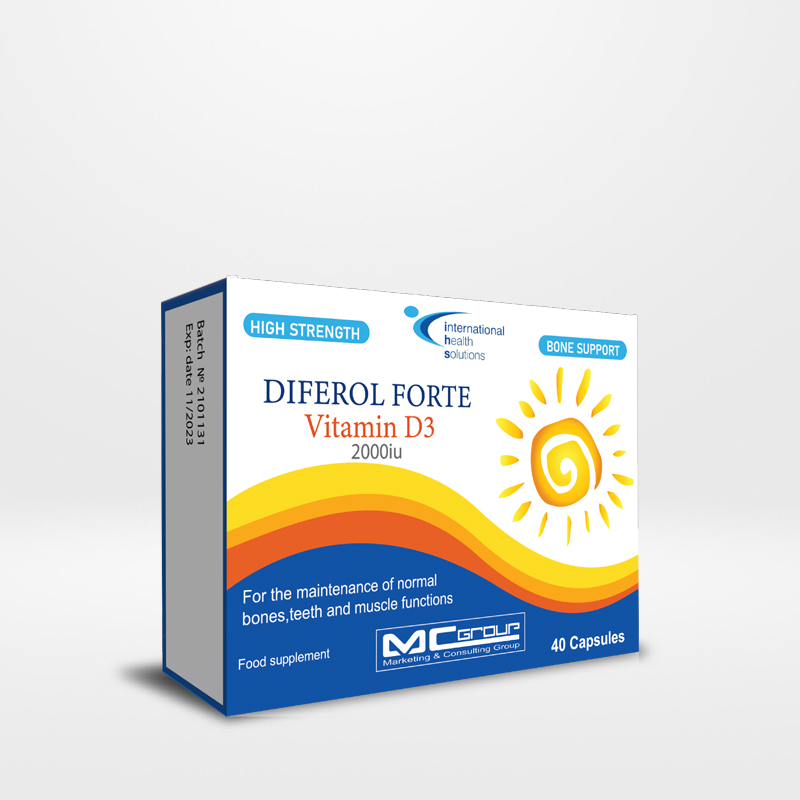
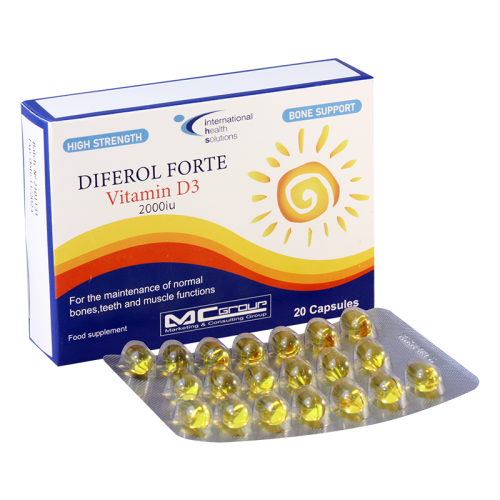
International Name (Active Ingredient): Colecalciferol
Clinical-Pharmacological Group: Metabolic disorders → Agents affecting phosphorus and calcium metabolism → Regulators of bone tissue metabolism → Vitamin D group → Vitamin D3 preparations
Manufacturer: Natures Aid
Country of Manufacture: United Kingdom
Dosage Form: Capsules #20
Dispensing Mode: Group III (Over-the-counter)
Active Ingredient:
Cholecalciferol
Dosage Form:
Capsule #20
Composition of Diferol Forte:
Each capsule contains:
- Vitamin D3 (Cholecalciferol) 50 µg (2000 IU).
Properties of Vitamin D3:
Vitamin D3 is an essential component of the human diet. It is an anti-rickets agent that replenishes Vitamin D3 deficiency. It regulates calcium-phosphorus metabolism, enhances calcium absorption in the intestines, and phosphate reabsorption in the kidneys. It promotes bone mineralization and is essential for the normal functioning of the parathyroid glands. Clinical studies have shown that Vitamin D3 is involved in the regulation of cell proliferation, metabolic processes, and stimulation of certain hormones.
Indications:
- Vitamin D deficiency
- Decreased immunity
- Osteoporosis (bone disease)
- Disorders of calcium and phosphorus metabolism
Dosage and Administration:
Recommended doses for individuals with Vitamin D deficiency or at risk of deficiency:
- Adults and the elderly:
- 2000 IU daily based on weight from September to April.
- 2000 IU daily year-round if adequate Vitamin D synthesis during summer is not ensured.
- For individuals over 65 years: 2000 IU daily year-round due to reduced skin synthesis of Vitamin D in this age group.
- Overweight adults and the elderly: 1600–4000 IU daily year-round.
- Individuals with darker skin tones: 1000–2000 IU daily year-round based on weight.
- Night shift workers: 1000–2000 IU daily year-round based on weight.
Adequate intake of Vitamin D is crucial for individuals with bone diseases such as:
- Osteoporosis
- Osteopenia (a precursor to osteoporosis characterized by reduced bone minerals)
- Osteomalacia (insufficient bone mineralization caused by Vitamin D deficiency, leading to impaired calcium absorption in the intestines and subsequent calcium deficiency).
Higher doses of Vitamin D are also important for individuals with kidney diseases. Taking Diferol alongside sun exposure does not pose an overdose risk.
Dosage Adjustment:
The dose should be selected individually by a doctor based on the degree of Vitamin D3 deficiency and the body’s response to the treatment. Diferol can be taken independently of meals.
Special Instructions:
- Use under medical supervision and according to the doctor’s recommendation.
- Not recommended for use in any other manner.
- Not intended for parenteral administration.
Storage Conditions:
Store at room temperature in a cool, dry place.
Shelf Life:
Indicated on the packaging.
Dispensing Conditions:
Available without a prescription.