
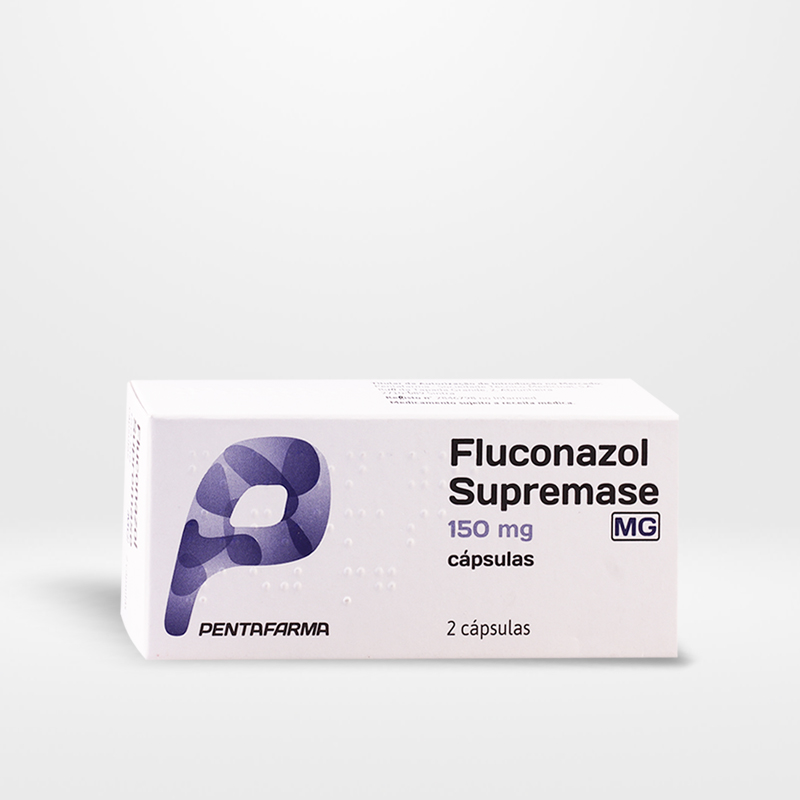
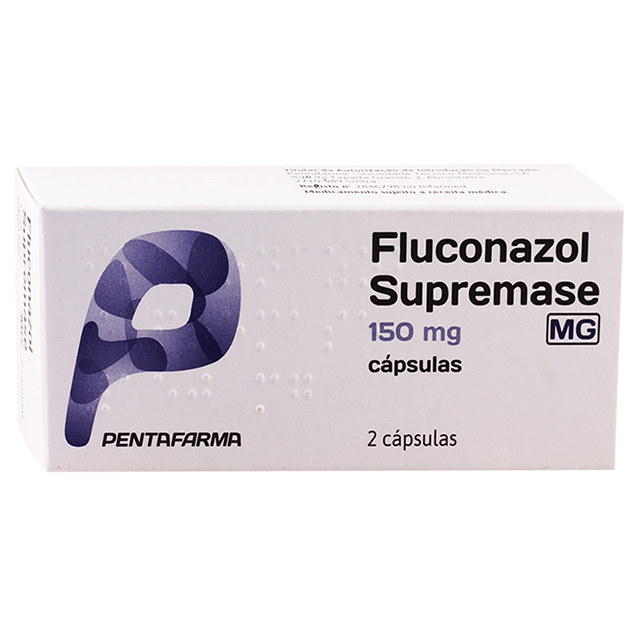
International Name (Active Ingredient): Fluconazole
Clinical-Pharmacological Group: Antifungal agents → Systemic antifungal medications → Azole group
Manufacturer: PENTAFARMA
Country of Manufacture: Spain
Form: 150 mg capsule, 2 capsules
Dispensing Regime: Group II (prescription required, Form N3)
Composition:
Active Ingredient: Fluconazole – 150 mg
Pharmacotherapeutic Group: Antifungal Agent
Indications:
Supremaza is used to treat fungal infections. The most common cause of fungal infections is the yeast-like fungi of the Candida group. The medication is prescribed by a doctor for the treatment of the following infections:
- Candidiasis stomatitis or oral and pharyngeal candidiasis (infection of mucous membranes), commonly caused by Candida group fungi.
- Candidiasis of the lungs, urinary system, and skin.
- Oral candidiasis in patients with dentures (oral mucosal ulcers related to the use of dentures).
- Skin infections such as athlete’s foot, dermatophytosis, and nail infections.
- Systemic fungal infections of internal organs caused by Candida group fungi, e.g., blood infections (candidemia), urinary tract infections (candiduria), or infections in other organs.
- Infections in patients with compromised immune systems, especially in intensive care units.
- Cryptococcosis, including cryptococcal meningitis and cryptococcal infections in other locations (lungs, skin, etc.).
Supremaza may also be used for the prophylaxis of secondary fungal infections caused by Cryptococcus.
- Genital candidiasis, e.g., vaginal candidiasis, and to reduce recurrences of vaginal candidiasis (3 or more episodes per year).
- Candidal balanitis (inflammation of the head of the penis).
- The drug can also be used for the prophylaxis of secondary fungal infections in patients with compromised immune systems.
Supremaza is also used to treat rare fungal infections, such as: - Coccidioidomycosis,
- Paracoccidioidomycosis,
- Sporotrichosis,
- Histoplasmosis.
Contraindications:
- Increased sensitivity to the active substance or any of the excipients.
- Allergic reactions, including itching, skin erythema, or difficulty breathing.
- Supremaza should not be combined with terfenadine and cisapride.
Precautions:
The medication should be used with caution in conditions such as:
- Existing or planned pregnancy.
- Lactation period.
- Kidney diseases.
Side Effects:
Supremaza is generally well-tolerated but may occasionally cause the following side effects: nausea, vomiting, diarrhea, flatulence, skin rashes. If a rash develops during the treatment of superficial fungal infections and is associated with Supremaza use, treatment should be discontinued. If a rash appears during the treatment of invasive systemic infections, consult a doctor. In the case of bullous rashes or erythema multiforme, treatment should be stopped. Headache may occur occasionally. In rare cases, hepatic toxicity has been observed with fluconazole, typically in patients with severe fungal infections. If signs of liver damage appear, the treatment should be stopped. Rarely, changes in blood count, liver function, urine or biochemical parameters may occur. In such cases, special medical monitoring is required. Exfoliative skin reactions have been reported in rare cases during fluconazole therapy. There is an increased risk of severe skin reactions in patients with AIDS using various medications. In rare cases, some patients may experience allergic reactions to Supremaza, such as a sudden feeling of suffocation, difficulty breathing, or chest pain; swelling of the eyelids, face, and lips; skin rash or red spots accompanied by itching; or generalized itching. In these cases, consult a doctor.
Interactions with other medications:
Fluconazole should be used with caution in combination with the following medications: warfarin or coumarin-type anticoagulants, oral hypoglycemic agents such as chlorpropamide, glibenclamide, glipizide, or tolbutamide, hydrochlorothiazide, phenytoin, rifampicin, rifabutin, cyclosporine, tacrolimus, theophylline, terfenadine, astemizole, cisapride, zidovudine.
Dosage and Administration:
Supremaza capsules are for oral use only. Take the capsules with a small amount of water. The medication can be taken with or between meals.
For adults:
- Oral and pharyngeal candidiasis: 50-100 mg once a day for 7-14 days or longer.
- Oral candidiasis in patients with dentures: 50 mg once a day for 14 days (during denture disinfection).
- Esophageal candidiasis, non-invasive pulmonary infections, urinary tract infections, and skin and mucous membrane candidiasis: 50-100 mg once a day for 14-30 days.
- Prevention of recurrent oral and pharyngeal candidiasis in AIDS patients: 150 mg once a week.
- Genital candidiasis: 150 mg as a single dose.
- Vaginal candidiasis recurrence prevention (3 or more episodes per year): 150 mg once a month for 4-12 months or more if necessary.
- Dermatophyte infections: 50 mg once a day for 2-4 weeks; may extend treatment up to 6 weeks for tinea pedis.
- Lichen planus: 300 mg once a week for 2 weeks. Alternatively, 50 mg once a day for 2-4 weeks.
- Onychomycosis: 150 mg once a week for 3-6 months (hands) and 6-12 months (feet).
- Systemic candidiasis: 400 mg on the first day, then 200-400 mg once a day. For life-threatening candidiasis, the dose may be increased to 800 mg per day.
- Prevention of recurrent candidiasis: 50-400 mg once a day during periods of increased infection risk.
- Cryptococcal infections: 400 mg on the first day, then 200-400 mg once a day for 6-8 weeks or more. For life-threatening cryptococcal infections, the dose may be increased to 800 mg per day.
- Prevention of cryptococcal meningitis recurrence in AIDS patients: 200 mg once a day indefinitely.
- Coccidioidomycosis, paracoccidioidomycosis, sporotrichosis, and histoplasmosis: 200-400 mg once a day for 2 years or more.
For children (4 weeks to 15 years):
- Mucosal candidiasis: 3 mg/kg body weight once a day on the first day, then 6 mg/kg body weight once a day.
- Systemic candidiasis or cryptococcal infections: 6-12 mg/kg body weight once a day.
- Prophylaxis of fungal infections during periods of increased risk: 3-12 mg/kg body weight once a day.
- For neonates (up to 2 weeks old), the same doses as for older children are recommended, with a 72-hour interval, and for neonates 2-4 weeks old, the same doses are given with a 48-hour interval.
In elderly patients:
No dose adjustments are necessary if kidney function is normal. In patients with kidney dysfunction, dose adjustments may be required.
Overdose:
In case of overdose, various side effects may develop. Corrective treatment should be provided in consultation with a doctor at a medical facility.
Storage Conditions:
Store at temperatures not exceeding 30ºC. Freezing is not allowed. Keep out of reach of children.
Shelf Life:
Do not use the medication after the expiry date.
Packaging:
N2, 150 mg capsules in a blister pack.